
Build an inventory of business-critical systems
List users, devices, servers, internet connections, applications and existing service providers. Identify which systems stop work when they fail and who currently manages access to them.
Keep your team working with support for computers, servers, networks and business applications. ArmCyberSec provides IT infrastructure maintenance for companies across Armenia, with scope and support arrangements matched to your systems.
Everything your business needs for uninterrupted employee workflows, data protection, and IT cost reduction.
Instant resolution of daily computer, software, and printer issues for your staff. No more operational downtime!
We ensure 24/7 reliability for your database and servers, preventing crashes before they interrupt your sales.
We organize seamless office Wi-Fi, link remote branches, and configure secure VPNs for home offices.
We build a robust cyber defense for your business, protecting databases and confidential files from leakage.
Skip purchasing expensive physical hardware. We migrate your corporate files and databases to secure clouds.
We audit your systems, discover weak points, and build bulletproof recovery plans for any critical outages.
Choose the optimal pricing plan that fits your business scale and demands
For small businesses up to 20 employees
For growing businesses with 20 to 100 employees
For large enterprises from 100 employees
We design, deliver and manage our services strictly following elite global standards
IT Service Management
IT Service Quality
Information Security
Cybersecurity Framework
Infrastructure Protection
What distinguishes a world-class IT outsourcing partner on the market
Dedicated Service Desk infrastructure
Strict SLA requirements and transparent KPIs
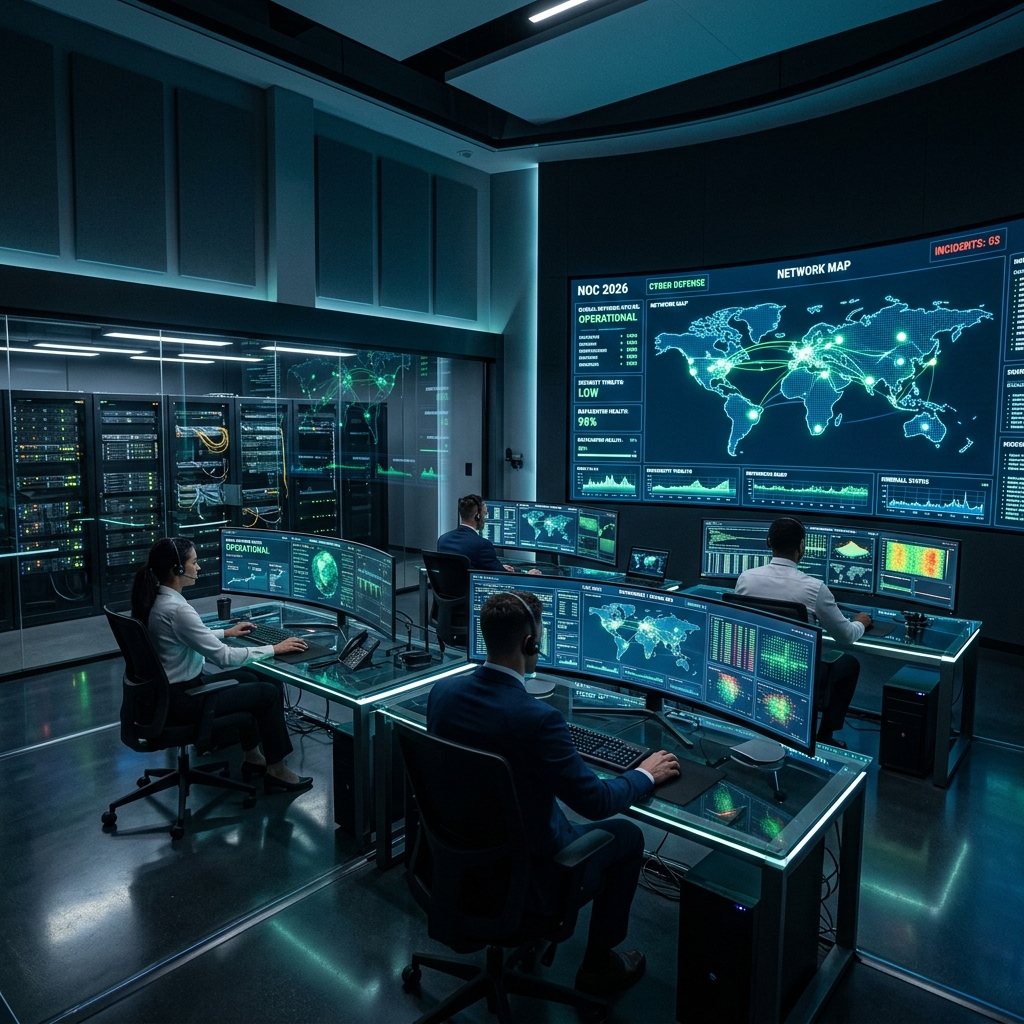
Continuous 24/7 service monitoring
Comprehensive and detailed system documentation
Automated backups and regular restoration tests
Enterprise-grade security embedded at all levels
Detailed monthly analytical reports
Rigorous Change Management processes
Proactive support to resolve issues before they occur
Continuous automation of routine workflows
State-of-the-art ITSM platform tools
Focus on business results rather than billable hours
Instant connection with our engineering team through modern channels in real-time
Automated incident creation, AI diagnostics, and a direct line to an L1/L2 engineer.
Dedicated corporate channel for emergency communications and quick change approvals.
Shared Channel for real-time collaboration between our team and your staff.
Clients call, dial their company code, then their personal ID, and leave a voice message. The system auto-transcribes, creates a ticket, and notifies the client. Issue is resolved in 5–15 minutes.
List users, devices, servers, internet connections, applications and existing service providers. Identify which systems stop work when they fail and who currently manages access to them.
Agree support hours, request channels, incident priorities and responsibilities for software vendors or internet providers. Distinguish a target response time from the time required to resolve an incident.
Support is more than fixing individual tickets. Plan updates, access reviews, backup checks and recovery tests alongside daily requests. Changes to critical systems should have an owner and a rollback approach.
Yes. Define which requests remain with your team and which infrastructure or support tasks are outsourced. Clear ownership helps avoid duplicate work and gaps in coverage.
User and device counts, server and network complexity, support hours, locations and required service levels affect scope. An inventory and a description of recurring issues help assess the work.
A backup is only one part of recovery. Check that it completes, is protected from unauthorised changes and can actually be restored. Recovery time and acceptable data loss should be discussed separately.
If systems are stable but employees still copy data or chase approvals manually, automation may address the underlying process. IT support maintains the tools; automation changes how work moves between them.